The Future of IPTV and Online Streaming Services (2026)
Internet Protocol Television (IPTV) and online streaming services have already reshaped how billions of people consume entertainment. As we move deeper into 2026, the pace of innovation is accelerating. From artificial intelligence and 8K resolution to cloud DVR and interactive viewing, the future of IPTV promises a more personalized, immersive, and accessible television experience than ever before. In this article, we explore the key trends, emerging technologies, and practical steps you can take today to stay ahead of the streaming revolution.
How IPTV and Streaming Have Evolved
Just a decade ago, cord-cutting was a niche movement. Today, it is the norm. Traditional broadcast and cable television are giving way to internet-based platforms that offer on-demand libraries, live TV, and multi-screen flexibility. IPTV specifically delivers television content over internet protocol networks, allowing viewers to stream live channels, catch-up TV, and video-on-demand directly through their broadband connection. The shift has been driven by faster internet speeds, affordable streaming devices, and consumer demand for control over what they watch and when they watch it.
- Broadband penetration across Europe and North America now exceeds 90% in urban areas
- Smart TVs, Firestick, Apple TV, and Android boxes have made IPTV setup effortless
- Consumers now expect instant access to global channels, sports, movies, and series
- The rise of 5G and fiber optics has eliminated many buffering and latency issues
Key Trends Shaping the Future of IPTV
1. AI-Powered Personalization and Recommendations
Artificial intelligence is transforming how viewers discover content. Instead of scrolling through endless channel lists, AI algorithms analyze your viewing habits, time-of-day preferences, and genre interests to curate a personalized dashboard. In the near future, your IPTV app will proactively suggest live sports about to start, recommend movies based on your mood, and even auto-generate highlight reels from matches you missed.
- Smart EPG that learns and reorders channels based on your habits
- Auto-generated playlists for news, sports, and entertainment
- Voice search with natural language understanding
- Predictive buffering that preloads content before you press play
2. 8K, HDR, and Next-Gen Video Codecs
While 4K is now standard, 8K streaming is on the horizon. New codecs like AV1 and VVC (Versatile Video Coding) compress video more efficiently without sacrificing quality, meaning even viewers on moderate broadband speeds can enjoy crisp, cinema-grade visuals. HDR10+ and Dolby Vision support are also becoming common in premium IPTV services, delivering deeper contrast and more vibrant colors.
- AV1 codec reduces bandwidth usage by up to 30% compared to HEVC
- 8K live sports and nature documentaries are already being tested by major broadcasters
- HDR support enhances live events like football matches and concerts
- AI upscaling improves the quality of older SD and HD content
3. Cloud DVR and Unlimited Recording
Local storage limits are becoming a thing of the past. Cloud DVR allows users to record unlimited live TV directly to remote servers, accessible from any device, anywhere. This is especially valuable for European viewers who travel frequently or want to catch up on sports and news from a different time zone. Advanced cloud DVR systems also offer AI-powered clipping, letting you save just the highlights of a match or a specific news segment.
- Unlimited recording capacity with no hard drive required
- Access recordings on Smart TV, mobile, tablet, and laptop
- AI-generated highlight clips for sports and news
- Automatic ad-skipping on recorded content
4. Ultra-Low Latency and Interactive Streaming
One of the biggest technical leaps in IPTV is the reduction of streaming delay. New protocols like SRT, WebRTC, and Low-Latency HLS are shrinking the gap between broadcast and internet streams to just a few seconds. This makes real-time interaction possible: live voting, multi-angle sports viewing, instant replays, and social watch parties integrated directly into the player interface.
- Near real-time live sports with minimal delay
- Multi-angle cameras selectable by the viewer
- Integrated live chat and social sharing
- In-stream polls, trivia, and betting integrations
5. Seamless Multi-Device and Cross-Platform Sync
Modern viewers do not watch on just one screen. The future of IPTV is built around continuity: start a movie on your Smart TV, pause it, and resume on your tablet during your commute. Cross-platform synchronization ensures that watchlists, favorites, recordings, and playback progress are instantly mirrored across every device you own.
- Universal watchlists shared across Firestick, Apple TV, mobile, and web
- One-click casting from phone to TV
- Parental controls synced across all family devices
- Consistent UI and shortcuts regardless of platform
How to Prepare for the Future of Streaming
Step 1 — Upgrade Your Internet Connection
- Ensure your broadband plan supports at least 50 Mbps for 4K and 100+ Mbps for 8K streaming.
- Use a wired Ethernet connection for your main TV or streaming box where possible.
- Upgrade your Wi-Fi router to Wi-Fi 6 or Wi-Fi 7 for better multi-device performance.
Step 2 — Choose Future-Proof Hardware
- Invest in a 4K or 8K Smart TV with HDR support and a fast processor.
- For older TVs, use a modern streaming stick like Firestick 4K Max, Apple TV 4K, or NVIDIA Shield.
- Ensure your device supports the latest codecs and receives regular firmware updates.
Step 3 — Select a Forward-Looking IPTV Provider
- Look for providers investing in server upgrades, CDN expansion, and app modernization.
- Verify that the service supports multiple playlist formats (M3U, Xtream Codes, Stalker).
- Choose a provider with reliable customer support and transparent channel listings.
Step 4 — Optimize Your Home Network
- Set your DNS to Cloudflare (1.1.1.1) or Google (8.8.8.8) for faster resolution.
- Enable Quality of Service (QoS) on your router to prioritize streaming traffic.
- Position your router centrally and reduce interference from thick walls and other electronics.
Pros and Cons of the Next-Generation IPTV Landscape
Pros
- • AI personalization delivers content you actually want to watch
- • 8K and HDR create a cinema-quality home experience
- • Cloud DVR removes storage limits and device dependency
- • Multi-device sync fits modern, mobile lifestyles
- • Lower latency enables interactive and social features
- • Global channel access breaks geographic boundaries
Cons
- • Requires a stable, high-speed internet connection
- • 8K hardware and content remain expensive in 2026
- • AI recommendations can create echo chambers
- • More connected devices increase privacy considerations
- • Rapid tech evolution can make hardware obsolete faster
- • Licensing restrictions still limit some international content
Best Practices for Future-Ready Streaming
- Keep your apps and firmware updated: Regular updates unlock new codecs, security patches, and AI features.
- Use a mesh Wi-Fi system: For larger homes, mesh networks eliminate dead zones and maintain consistent speeds.
- Enable two-factor authentication: Protect your IPTV accounts and cloud DVR libraries from unauthorized access.
- Test new features early: Many providers roll out beta AI tools and interactive modes — opt in to experience the future first.
- Read our comprehensive guide on choosing the right provider: Visit our IPTV provider selection guide for expert tips.
Internal Resources to Explore
Deepen your knowledge with these related guides from the FastIPTVPlus blog:
- Best IPTV Apps for 2026 — Compare the top players for every device and platform.
- How to Fix IPTV Buffering — Eliminate freezing and lag with proven network and settings optimizations.
- No Buffering IPTV Guide — Build the perfect setup for smooth, uninterrupted streaming.
Image Suggestions for Content Creators
If you are building your own media around the future of IPTV, these visuals will enhance engagement and accessibility:
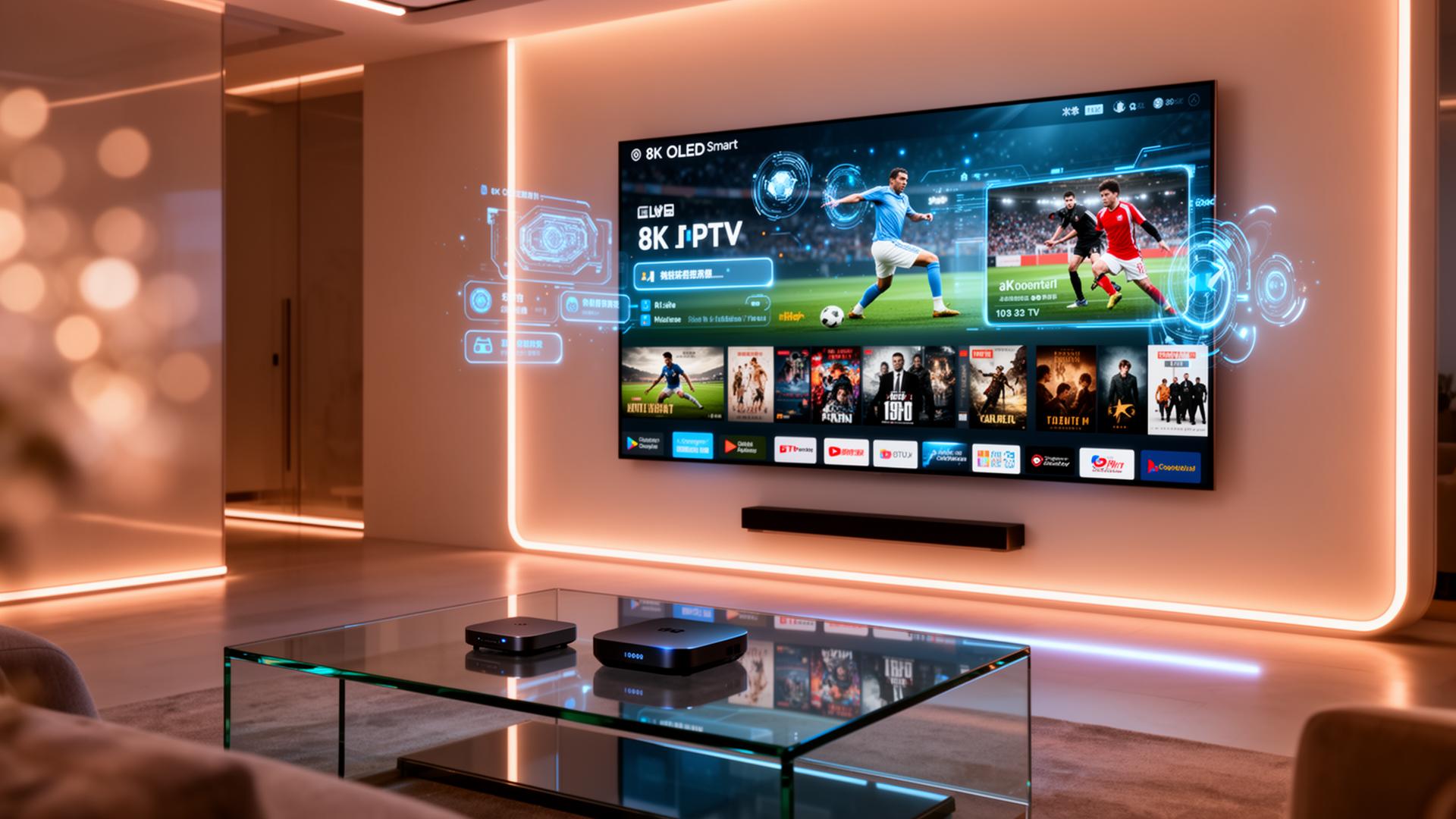
- Image 1 — Futuristic living room with an 8K Smart TV displaying an AI-curated IPTV dashboard: ALT text: "Modern futuristic living room with a large 8K Smart TV showing an AI-powered IPTV streaming interface with personalized recommendations and live sports thumbnails"
- Image 2 — Multi-device streaming ecosystem with synchronized playback: ALT text: "Array of connected devices including Smart TV, tablet, smartphone, and laptop all streaming IPTV content in perfect sync across a modern home network"
- Image 3 — Cloud DVR concept with digital recording icons and server visualization: ALT text: "Conceptual illustration of cloud DVR technology showing live TV recordings stored securely on remote servers and accessed from multiple screens"
Conclusion
The future of IPTV and online streaming services is bright, dynamic, and deeply personalized. As AI, 8K video, cloud DVR, and ultra-low latency protocols mature, viewers will enjoy a television experience that feels less like traditional broadcasting and more like a tailored digital concierge. By upgrading your internet, investing in modern hardware, and choosing a forward-thinking IPTV provider, you can step confidently into this new era of entertainment. The streaming revolution is not coming — it is already here, and it is only getting better.
Ready to experience the future of television today? Explore our IPTV subscription plans and unlock thousands of live channels, on-demand movies, and sports events on any device, anywhere in the world.
Ready to start streaming?
Explore our subscription plans and get instant access to live TV, sports and a huge VOD library on any device.
View IPTV PlansFrequently Asked Questions
More from the blog
Complete guide to high quality streaming with VOD — best devices, internet speed needs, setup steps, pros & cons, and expert tips for the ultimate on-demand experience.
Complete guide to premium 4K streaming for IPTV — best devices, internet speed needs, HDR setup, pros & cons, and expert tips for stunning Ultra HD quality.